
Bulk Paper & Printing Supplies for Offices: Buying Guide
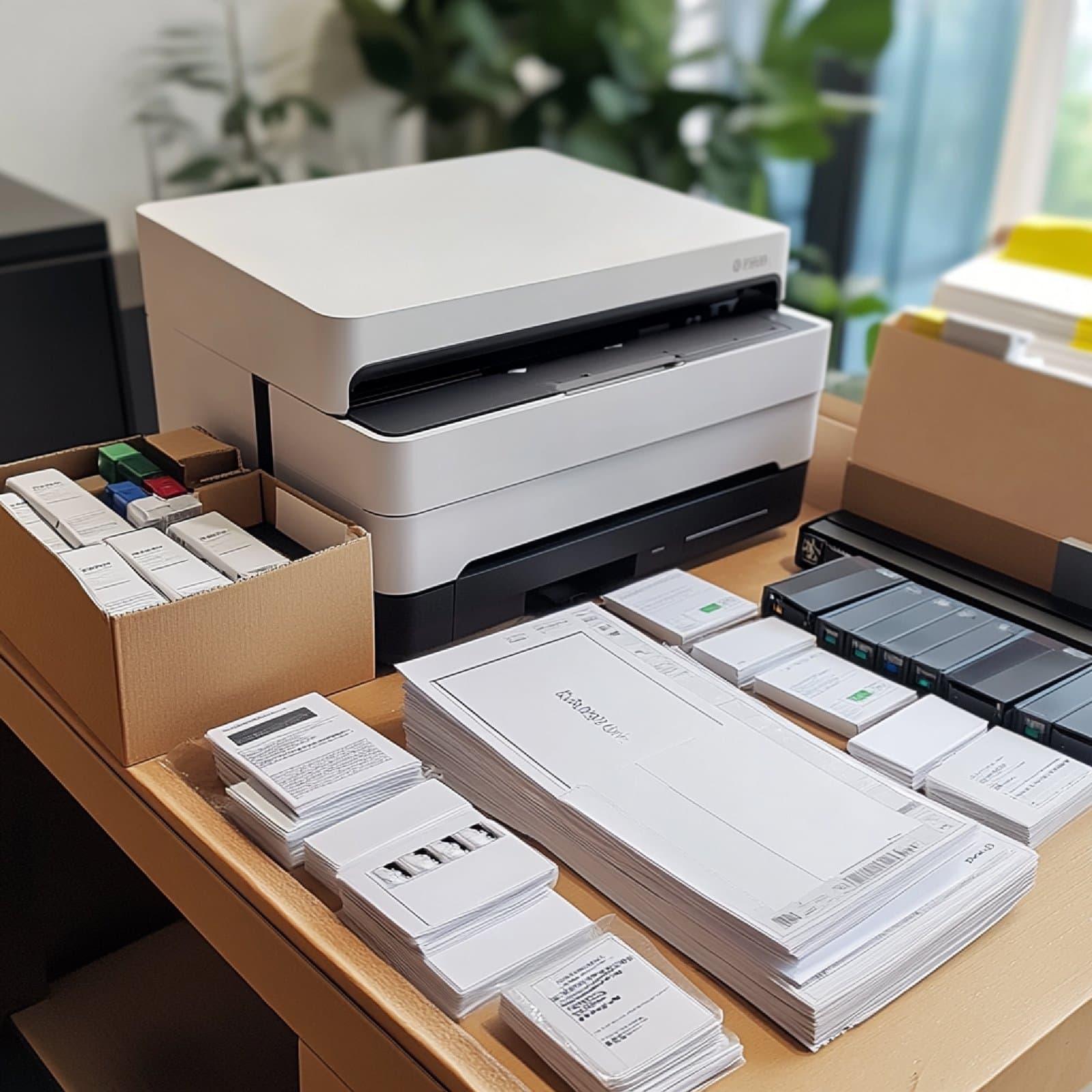
Paper and printing consumables are usually the highest-volume expense in any office that still prints regularly. Buying bulk paper supplies for office use means ordering copy paper by the case instead of the ream and keeping toner or ink on the shelf before the printer flashes a warning, not after. This guide covers what to stock, how to work out how much your office needs, and how to avoid the most common paper and printing mistakes.
Even offices that have gone mostly digital keep some print volume for contracts, mailing, and documents that still need a signature. Figuring out your baseline is the first step before you decide how much to order. For the wider picture on this category, see our office supplies in bulk guide.
What Should You Include in a Bulk Paper Order?
A good bulk paper order covers four things: standard copy paper, specialty paper, printer ink or toner, and envelopes or labels.
- Standard copy paper. The workhorse for most offices, usually letter size, is ordered by the case. A case typically holds 10 reams of 500 sheets, or 5,000 sheets.
- Specialty paper. Cardstock for signage, heavier paper for proposals, or letterhead for official correspondence. Usage is lower, so order smaller quantities.
- Printer ink or toner. Matched to your exact printer model. Cartridges are rarely interchangeable across brands, and sometimes not across models from the same brand.
- Envelopes and labels. Standard business envelopes, plus shipping or file labels if your office sends physical mail.
How Much Paper Does an Office Use?
The most reliable way to find out is to track usage for one month. Count your reams at the start, count again at the end, and subtract. Guessing usually leads to either a closet full of surplus paper or a rushed store run.
Here is a simple example. A 12-person office where each person prints about 20 pages a day, across 22 working days, uses roughly 5,300 sheets a month. That is a little over one case of 5,000 sheets, so a monthly order of one case plus a few extra reams covers it. If the same office goes more digital and cuts printing in half, a case every two months is enough.
Print-heavy departments such as accounting, legal, or admin can use several times more than the rest of the team, so it helps to check usage by department if one group seems to burn through paper faster than everyone else.
How to Choose the Right Copy Paper
Paper is sold by weight, brightness, and size, and the right choice depends on what you print.
| Spec | What it means | Typical use |
|---|---|---|
| 20 lb weight | The standard weight for everyday printing | Internal documents, drafts, forms |
| 24 lb weight | Slightly heavier, less show-through | Double-sided printing, client-facing documents |
| 28 to 32 lb weight | Noticeably thicker and more premium | Proposals, presentations, letterhead |
| Brightness (around 92) | How white the sheet looks | Higher numbers look crisper and cost more |
| Letter, legal, tabloid | Sheet dimensions | Letter for most work, legal for contracts, tabloid for large layouts |
For most offices, 20 lb letter paper covers the bulk of printing, with a smaller order of heavier paper for documents that go to clients. Before committing to a large case order of an unfamiliar brand, run a ream through your busiest printer. Some printers jam more easily on certain papers, and it is better to find that out before you own 10 reams of it.
How to Compare Paper Prices Fairly
Compare cost per sheet, not cost per case. Case sizes vary, and a cheaper-looking case may hold fewer sheets.
To calculate it, divide the case price by the number of sheets. Using illustrative numbers, a $45 case of 5,000 sheets costs 0.9 cents per sheet, while a $52 case of 5,000 sheets costs about 1.04 cents. Over 60,000 sheets a year, that gap is roughly $84. Add delivery costs to each supplier’s price before you compare, because shipping can erase a small unit-price advantage.
What to Know Before Buying Toner and Ink in Bulk
Toner and ink are where bulk buying goes wrong most often, because cartridges have a shelf life and a much higher cost per unit than paper.
- Match the order to the print volume. A cartridge that sits unused for a year or two can degrade. Check the manufacturer’s date guidance on the packaging, and buy what you will realistically use.
- Compare page yield. Page yield is the number of pages a cartridge is rated to print, typically at about 5 percent page coverage. Divide the cartridge price by its yield to get a cost per page.
- Weigh original vs. compatible cartridges. Original manufacturer cartridges cost more but are the safest match. Compatible and remanufactured cartridges are often cheaper. Quality varies by brand, so test one before ordering a case.
- Check printer settings. Draft mode and duplex printing reduce both paper and toner use at no cost.
If you are also replacing printers, the ENERGY STAR label identifies imaging equipment designed to use less energy and drop into a low-power mode when idle.
Standard vs. Recycled Paper
Recycled-content paper has closed most of the price gap with standard paper at wholesale prices. For everyday printing, the difference in print quality is small, so switching is an easy way to cut an office’s paper footprint without a meaningful cost change. Options with 100 percent post-consumer content can still carry a modest premium, so compare them case by case.
How to Store Bulk Paper
Paper takes up more space than most people expect, and storage conditions affect how well it runs.
- Keep cases off the floor, especially in humid climates. Damp paper curls and jams printers.
- Store specialty paper separately from standard copy paper so it does not get buried.
- Label boxes by weight and size if you stock more than one kind.
- Keep a short stock list inside the closet door so whoever restocks printer trays knows what is running low.
When to Reorder
Set a reorder point so the closet never hits zero. Multiply daily paper usage by the supplier’s delivery time in days, then add a small buffer. An office that uses about 240 sheets a day and waits seven days for delivery needs about 1,700 sheets on hand when the order goes in, which is roughly three and a half reams. Toner works the same way, except the trigger is usually one spare cartridge on the shelf. When you pull the spare into the printer, place the next order that day.
Common Mistakes with Bulk Paper and Printing Orders
- Buying the biggest toner case for a low-print office. Cartridges age before you use them, which erases the discount.
- Comparing case prices instead of cost per sheet. Case sizes and shipping costs change the real price.
- Skipping a test run. An unfamiliar paper or incompatible cartridge can cause jams or poor print quality.
- Storing paper in a damp area. Moisture is one of the most common causes of jams and wasted sheets.
- Forgetting specialty paper. Cardstock and letterhead get left off standard orders, then cost more when rushed.
Frequently Asked Questions
How often should an office reorder paper and toner? Most offices land on a monthly or quarterly paper order and a less frequent toner order, since a cartridge lasts longer per unit than a case of paper does.
Is a compatible toner as reliable as the original? It depends on the brand and the printer. Many compatible cartridges perform close to the original, but quality varies, and some printers are pickier than others. Test one cartridge before ordering a full case.
Does paper weight matter for everyday printing? For most internal printing, 20 lb paper works fine. Heavier weights matter more for double-sided pages and documents meant to feel more substantial, such as proposals.
Is it worth switching to recycled paper if cost is a concern? Usually yes. Standard recycled-content paper is close in price to regular paper at wholesale, so the switch rarely changes the budget in a noticeable way.
Should envelopes and labels go in the same order as paper? It is convenient, since they are all consumables, but usage is far lower than paper. Size the quantities separately rather than scaling them together.
What is the cheapest way to buy bulk paper supplies for office printing? Compare cost per sheet including delivery, order by the case on a recurring schedule, and ask the supplier about tiered pricing as your volume grows.